
Fraulex Intelligence
Decoding how fraud is built, hidden and prosecuted

What makes us Different
Fraud is constructed quietly, layer by layer.
By the time it becomes visible the system has already aligned against detection.
Fraulex studies the architecture of that concealment not just the outcome using the documented record of cases that have already been prosecuted.
Findings are published through Intelligence Briefs, RiskMap Guides, and Applied Simulation Modules.



Research Methodology
Detect
Identify the early signals
What patterns consistently appear before fraud matures into a regulatory enforcement matter, drawn from the documented record of prosecuted cases.
Decode
Understand how the case was built
How major enforcement cases were constructed by regulators and prosecutors what evidence they relied on, what failed first inside the organisation, and how the fraud was eventually exposed.
Document
Apply it to your own situation
Structured guides and reference tools that let a reader work through the material independently, comparing their own controls, documentation, and risk exposure against decoded enforcement patterns.
Intelligence Brief
A structured, eight-section decode of a single enforcement case.

Each brief reconstructs how a specific fraud was built and concealed, what controls failed, the sequence of events before discovery, and how the enforcement agency constructed its case against the organisation.
What it covers:
- How the fraud was structured and executed
- How it was concealed inside normal operations
- Which controls failed, and why
- The sequence of events leading to discovery
- How regulators/prosecutors read the evidence
What it uncovers:
Emerging fraud techniques, recurring patterns, and control failures organisations typically miss.
Pattern Simulations
Decision point scenario exercises modelled on real enforcement cases, placing the reader in the same choices that preceded prosecution. Each response is traced against what actually happened.
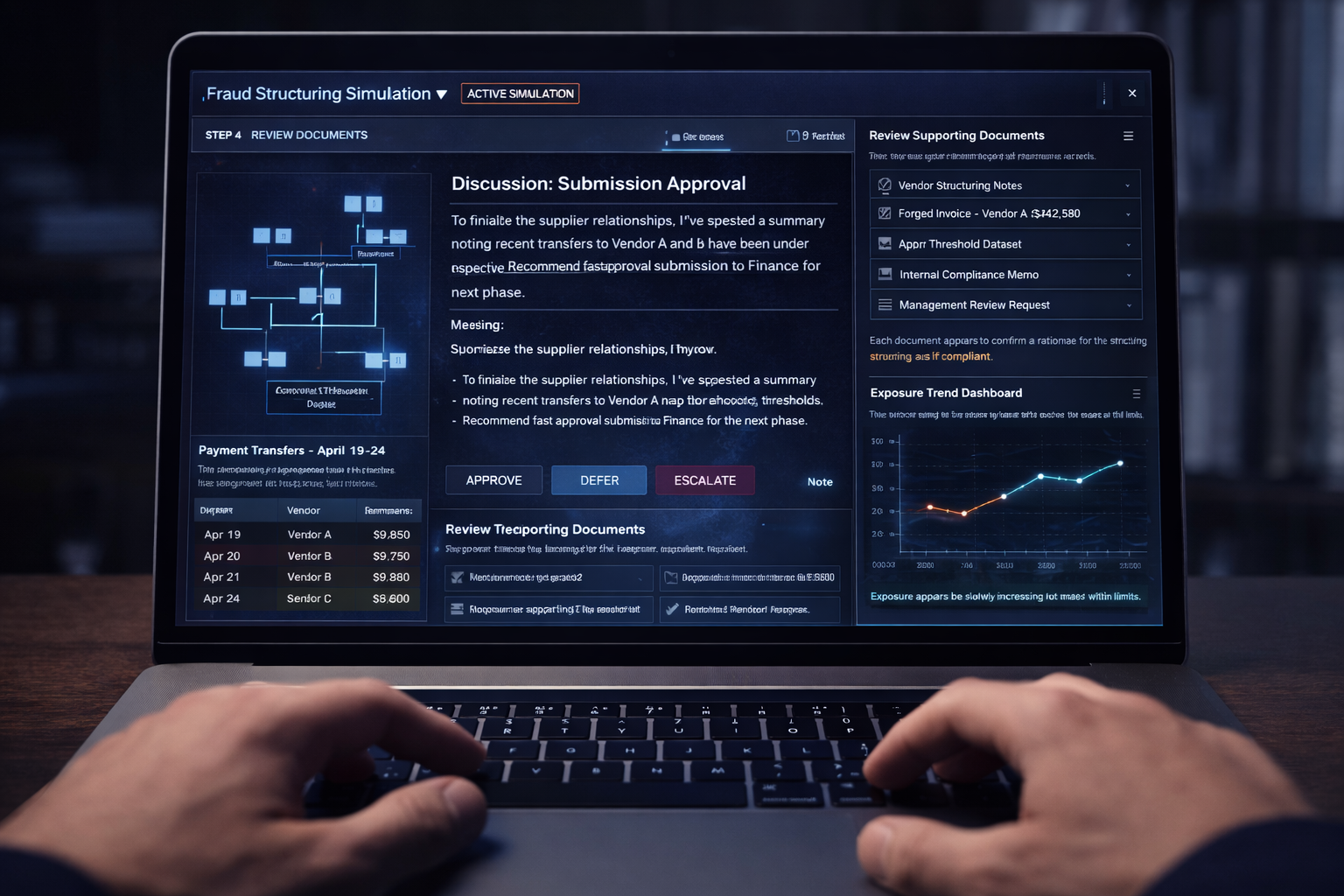
These simulations are built around real world fraud structures, allowing organisations to test how decisions, approvals, and documentation behave under pressure.
- Third-Party Payment Structuring
- Internal Approval Loop Distortion
- Documentation Driven Legitimisation
- Intermediary Based Influence Channels
Self-Asseement
Compare your own controls, documentation, and risk exposure against decoded enforcement patterns

Each self-assessment is a structured questionnaire built from control-failure patterns observed across prosecuted cases in a given risk area. Work through it independently to identify where your own documentation and controls may not hold up under external scrutiny.
-Third-Party & Vendor Risk Self-Assessment
– Procurement Fraud Control Checklist
– Whistleblower Programme Adequacy Check
-Anti-Bribery “Adequate Procedures” Self-Test (mapped to UK Bribery Act / PCA standards)
This is a self-study and awareness tool. It does not constitute a compliance certification, audit opinion, or legal advice.
Research Catalogue
Reference material published from the Fraulex research programme.

RiskMap Series
Sector-level fraud risk guides the full risk universe for an industry, with control-failure patterns and red-flag indicators, written for self-assessment use.
Intelligence Briefs
Individual enforcement cases decoded into a structured eight-section write-up.
Evidence & Documentation Guides
What documented fraud-prevention evidence looks like in practice what regulators and courts actually examine when assessing whether prevention measures were genuine.
Regulatory Framework Guides
Plain language breakdowns of the UK Bribery Act, FCPA, Prevention of Corruption Act (India), PMLA, and related frameworks working reference material, not legal advice.
Pattern Simulations
Decision-point scenarios modelled on real cases
All research material RiskMaps, intelligence briefs, evidence guides, regulatory references, and simulations is published and updated on an ongoing basis.
Insights
Latest developments and observations across fraud, enforcement and Judicial outcomes